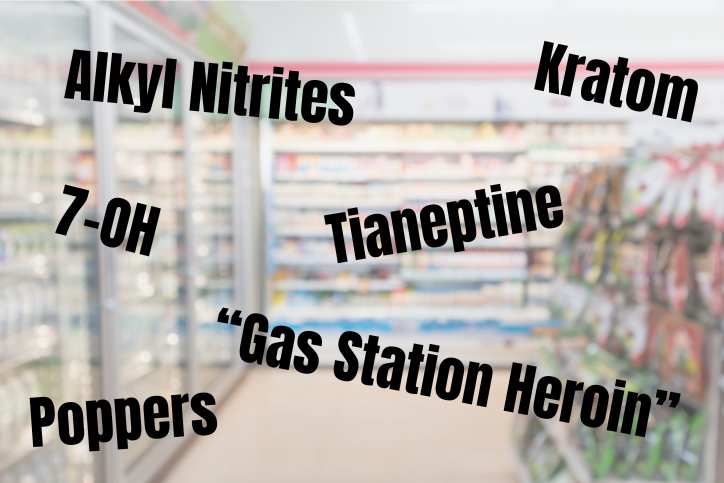
There are a variety of shops that sell products you may not know are unregulated. These kinds of shops include, but aren’t limited to, gas stations, smoke or vape shops, convenience stores, and corner stores. Sometimes you can find products that may seem harmless, but using them could be dangerous and could send you to the hospital. Let’s look at some dangerous items that are found at gas stations, smoke or vape shops, convenience stores, or corner stores.
Kratom and 7-hydroxymitragynine (7-OH)
Derived from the Southeast Asian plant Mitragyna speciosa, kratom has been used for its euphoric or “high” effects since the 19th century. Kratom is not approved as a drug or dietary supplement by the U.S. Food and Drug Administration (FDA). This means the product is not regulated and does not undergo testing to ensure its safety and purity (getting only the substance you want without other additives) before it’s available for purchase. The FDA warns people not to use the product due to the risks.
Depending on the amount taken, kratom can have stimulant effects (similar to the caffeine in coffee) or sedating effects that make a person feel sleepy or relaxed. Kratom has sometimes been used as a “natural” option for self-treating opioid withdrawal symptoms. Kratom activates the same receptors in the brain as opioids. Like opioids, kratom can be addictive and dangerous. It can cause side effects such as:
- Hallucinations
- Confusion
- Nausea
- Vomiting
- Dry mouth
In more serious cases, kratom can cause:
- Seizures
- Liver damage
- Changes in heart rhythm that can lead to sudden cardiac death
Like opioids, when you stop using kratom it can cause you to be in withdrawal. Symptoms of withdrawal include:
- Diarrhea
- Nausea
- Vomiting
- Insomnia (trouble sleeping)
- Muscle pain
- Changes in breathing, heart rate, blood pressure, and body temperature
There are two main chemicals in kratom that cause its opioid-like effects: mitragynine and 7-hydroxymitragynine (7-OH). The compound 7-OH is 10 times more potent than the compound mitragynine. Available products containing only 7-OH can be more potent than kratom products, which contain mostly mitragynine and a small amount of 7-OH. Both kratom and 7-OH products are sold in different forms, including powders, tablets, pills, or liquid extracts.
Tianeptine
Tianeptine (also called “Neptune’s fix,” “Za Za,” or “gas station heroin”) is not FDA-approved for medical use in the United States, despite its use in other countries. Sellers may market this product with dangerous and unproven claims that it can improve brain function and treat depression, anxiety, pain, or other conditions. Since the FDA does not regulate it, there is no quality control on the product. The amount or dose of the drug may be much higher than what the label says. The product may also contain other dangerous substances, or it may not be labeled at all. There have been reports of people in the United States taking daily doses of tianeptine that are up to 250 times higher than the daily dose typically recommended in other countries. Tianeptine also acts like an opioid in the brain and can be addictive. Tianeptine can cause opioid toxicity and opioid withdrawal.
Taking too much tianeptine can cause:
- Changes in heart rate, heart rhythm, and blood pressure
- Agitation or sedation
- Confusion
- Seizures
- Death
Tianeptine products may be found online, at gas stations or smoke shops or other convenience stores, or mixed into illegal drugs. Tianeptine can come in different forms such as tablets, pills, or small liquid beverages.
Alkyl Nitrites – Poppers
Alkyl nitrites is a chemical class that includes amyl nitrite, isobutyl nitrite, and isopropyl nitrite, more commonly known as poppers. Poppers are substances meant to be inhaled to produce a “high” or to enhance sexual experiences. Poppers are often packaged in small bottles that may look similar to energy shot drinks. The packaging label may include wording to make the product sound like it could be used as an air freshener, liquid incense, deodorizer, cosmetic product, or nail polish remover.
When inhaled or swallowed, poppers can cause a life-threatening blood condition called methemoglobinemia. This condition reduces the ability of your body’s red blood cells to carry oxygen throughout the body causing symptoms such as:
- Headache
- Cyanosis (blue-colored skin)
- Trouble breathing
- Fainting or dizziness
In severe cases, poppers can cause:
- Seizure
- Coma
- Death
Luckily, there is an antidote to treat methemoglobinemia which is given in a hospital.
Protecting Yourself and Your Family
Read product labels carefully before buying or using a product. Some of these substances may look like common household products, drinks, supplements, or medicines.
If you or someone you know has questions about a medical condition or is seeking treatment, contact your health care provider before using any new product to make sure it is safe for you and won’t interact with the medicines you take. For help with substance use disorders, contact SAMHSA’s National Helpline at 1-800-662-HELP (4357). This is a free and confidential information service available 24/7 for people facing mental health and/or substance use concerns. If you or someone you know has used one of these substances or has questions about a product, contact your local poison center at 1-800-222-1222.
Melinda Lee, PharmD
Senior Clinical Toxicology Fellow
Maryland Poison Center
University of Maryland School of Pharmacy