

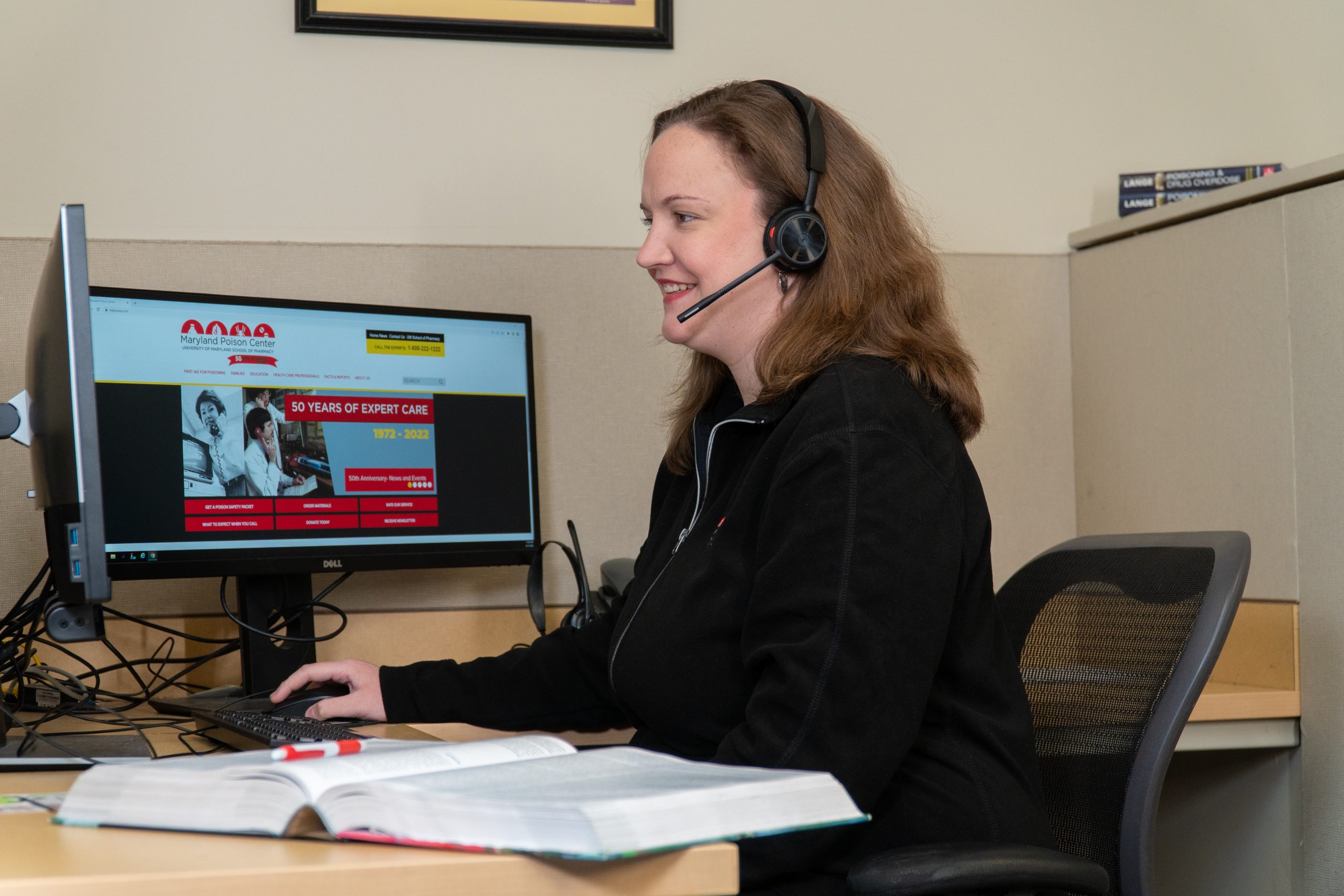
You or someone you know has a poison exposure or question and has decided to call the Maryland Poison Center (MPC). Congratulations – you’ve already taken the most important step! You should call your local poison center as soon as you suspect a poisoning or overdose. In this blog, we’ll cover what to expect when you call 1-800-222-1222.
What Can I Call For?
You can call Poison Centers for help with more than you may think. MPC poison specialists have more than 210 years of combined experience answering poisoning and overdose calls and have heard it all! Our experts can help you with:
- Drugs and medicines (prescription, over-the-counter, vitamins, supplements, illegal/recreational, or veterinary)
- Household, personal care, and garden products
- Chemicals
- Plants, berries, and mushrooms
- Bites and stings (insects, snakes, spiders, and more)
- Gases and fumes
- Food poisoning
- Any items that give individuals an unwanted or unexpected reaction
Who Will I Speak To?
Your call will be answered by a pharmacist or nurse with specialized training in toxicology, which is the study of poisons. That’s right – a real person! Our specialists are here to help and will never judge you. Poisonings can happen to anyone, and even health care professionals like physicians, nurses, and paramedics call us for expert guidance.
Remember, this expert guidance is free and available to you 24/7!
How Can I Get the Fastest Answer?
Calling the Maryland Poison Center for treatment advice or a question gives you a faster and more accurate answer than searching for answers online. To help us assess the situation and recommend the next best steps as quickly as possible, it’s helpful to have a few details ready when you call.
Be prepared to provide information such as:
- Product name and ingredients: If possible, have the product or it’s packaging nearby. Our specialists may ask about specific ingredients to ensure they identify the correct product.
- Amount of product involved: It is important to know how much of a product is involved with each exposure we handle. If you aren’t sure of the exact amount, our specialists can work with you to determine an estimate.
- Time of exposure: Knowing when the exposure occurred helps our specialists determine the appropriate next steps and what symptoms (if any) to watch for.
- How the exposure occurred: Knowing if the substance was swallowed, got in the eyes, on the skin, or was inhaled, is helpful to our specialists’ understanding of the situation.
- Symptoms the person is having: This is extremely important and helps us understand how the body is reacting to the exposure. Specialists will either monitor symptoms at home and follow up by phone or will recommend going to a health care facility if the person cannot be safely treated at home.
- Age and weight of the person: A person’s age helps us determine what kind of treatment to pursue. The way specialists handle an exposure in a child is often different than it is for an older adult. Weight is especially important when a medicine is involved because it helps specialists calculate whether the amount taken is an overdose and how it may affect the body. Weight can also be used to determine dosing for possible treatments.
- Any first aid measures taken prior to your call: This helps us determine the best next steps for each case. Review our recommended first aid.
Do I Need to Provide Personal Information?
Depending on the type of case, the poison specialist may ask you for some information to start a medical record. This record has the same privacy protection as the medical record in your physician’s office (HIPAA). Information that could be asked includes first name, age, and a callback phone number for follow up. The specialist will also ask for your zip code so we know which part of Maryland and D.C. our calls are coming from. This information is for our records only.
If you prefer not to provide this information, you do not have to- our poison specialists will still help you with your situation. For more information, visit our “Why So Many Questions?” blog.
What Will the Specialist Tell Me to Do?
Our experts provide specific advice for your exact situation. Approximately 65 percent of cases managed by the Maryland Poison Center can be safely managed at home. Depending on the exposure, recommendations may range from simple steps, such as drinking water, to more specific treatments. In some cases, our specialists may recommend further treatment at a health care facility. If a hospital visit is needed, our specialist will let you know if you should call an ambulance or if you can safely go by car. They will also contact the hospital to let them know you are on the way and provide treatment recommendations. The Maryland Poison Center will continue to follow up on your care until you have been discharged.
The Maryland Poison Center is here to provide fast, free, and confidential expert help for poisonings and questions by calling 1-800-222-1222. If someone is experiencing life-threatening symptoms, call 911 immediately.
Additional Resources:
- 988 Suicide and Crisis Lifeline
- Pet Poison Helpline: 855-764-7661 or www.petpoisonhelpline.com
- ASPCA Animal Poison Control Center: 888-426-4435 or aspca.org/pet-care/aspca-poison-control
Comments are closed.