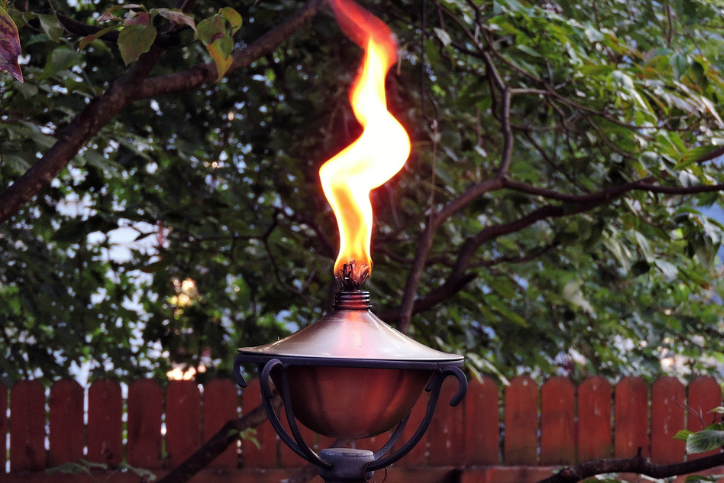
Lamp oil is widely used during the summer months when people gather outdoors for barbecues, camping trips, or decorate their backyards with tiki torches. While oil lamps create a relaxing and warm glow, they can also pose safety risks if used incorrectly.
The Maryland Poison Center manages cases every summer about lamp oil exposures and receives questions about what to do if someone swallows it. In this blog, we’ll discuss lamp oil safety and ways to prevent lamp oil exposures.
What is lamp oil made of?
Lamp oil is typically made from a mixture of chemicals called hydrocarbons and may also contain alcohol or added fragrances. It has a thin, water-like consistency and may be clear or dyed in a variety of colors.
The two most common types of lamp oil are kerosene and paraffin.
Kerosene Oil
Kerosene is a clear liquid made from petroleum and is sometimes used as lamp fuel because it produces a very bright flame. There are two main types used in household lamps: red kerosene and K-1 kerosene.
Red kerosene contains dye, produces a stronger odor, and can produce a lot of smoke and soot (powdery black substance). If it is used, it should only be burned outdoors or in very well-ventilated spaces. It should not be used indoors, as the added dye and fumes may be irritating if breathed in.
K-1 kerosene is the more commonly available product and is often sold in retail stores for use in lamps and space heaters. Although it is more refined, it can still contain small amounts of sulfur and other impurities that may produce strong fumes when burned.
Paraffin Oil
Paraffin is another petroleum-based fuel and is the most commonly used lamp oil. It is typically odorless, clear, and sometimes colored or scented. Paraffin is highly refined, containing fewer impurities, so it burns cleaner with less soot and produces less air pollution, making it a popular choice for indoor use.
Both kerosene and paraffin are hydrocarbons and are highly flammable, which means they can ignite easily and burn quickly.
Citronella Oil
Citronella oil is also used in oil lamps and tiki torches. Most citronella lamp oils are made with a paraffin-based fuel infused with citronella extract, giving them a fresh, grassy, citrus-like scent. Citronella extract is known for helping repel mosquitoes and other insects, making it a popular choice for outdoor use during the summer. Paraffin-based citronella oils also burn cleanly and are odorless before the citronella fragrance is added.
Is lamp oil toxic?
Most lamp oils are made with paraffin or kerosene, which generally have a low poisoning risk if only a small amount is swallowed. However, some lamp oils contain other chemicals that may be more dangerous. Always read the product label before purchasing or using lamp oil.
Symptoms of lamp oil ingestion:
- Upset stomach or diarrhea
- Irritation of the mouth and throat
- Coughing, choking, or trouble breathing
- Aspiration (when the liquid enters the lungs instead of the stomach)
The greatest danger from swallowing lamp oil is aspiration. Lamp oil is thin and watery, making it easy for it to enter the lungs, especially if someone coughs or chokes after swallowing it. Even a small amount in the lungs can cause serious lung injury, known as chemical pneumonia, which requires immediate medical attention.
If someone swallows lamp oil and has trouble breathing, call 911 immediately. If they are not experiencing any life-threatening symptoms, call the Maryland Poison Center at 1-800-222-1222 for help.
Are lamp oil fumes toxic?
Before using any lamp or candle, it’s important to know what fuel or materials it contains, as burning them can release fumes into the surrounding area. Some people may be more sensitive to fragrances or smoke than others. In general, fumes from paraffin lamp oil are considered a low toxicity risk. However, kerosene – especially dyed red kerosene – can produce strong-smelling fumes that may irritate the throat and lungs when breathed in.
Symptoms of lamp oil irritation include coughing, headache, dizziness, or nausea. If someone is experiencing symptoms, move them away from the lamp and into fresh air. Open windows or doors to help ventilate the area. If symptoms continue or worsen, call the Maryland Poison Center right away. Call 911 immediately if the person is in severe distress or having difficulty breathing.
How to prevent lamp oil exposures
Children and adults may accidentally swallow lamp oil because it can look like water or another beverage. To help prevent exposure, always keep lamp oil in its original labeled container. If you must transfer lamp oil to a different container, make sure it is clearly labelled and includes the directions and any warnings that are on the original container. Store lamp oil up, away, and out of sight of children. Never leave a paraffin lamp unattended where a child can reach it. Oil lamps can also be a fire hazard. Never leave an oil lamp unattended while it is burning.
What to do if you have swallowed lamp oil
If you or someone in your home swallows lamp oil, call the Maryland Poison Center right away at 1-800-222-1222 for expert guidance. If the person is coughing persistently (cannot stop coughing), is unable to catch their breath, or is choking, the oil may have entered their lungs (aspiration), and they need immediate medical attention. Call 911 immediately if they are having trouble breathing or are in distress.
If you have questions or concerns about a lamp oil exposure, the Maryland Poison Center is here to help. Our certified poison specialists are available 24/7 to provide expert advice and answer your questions.