
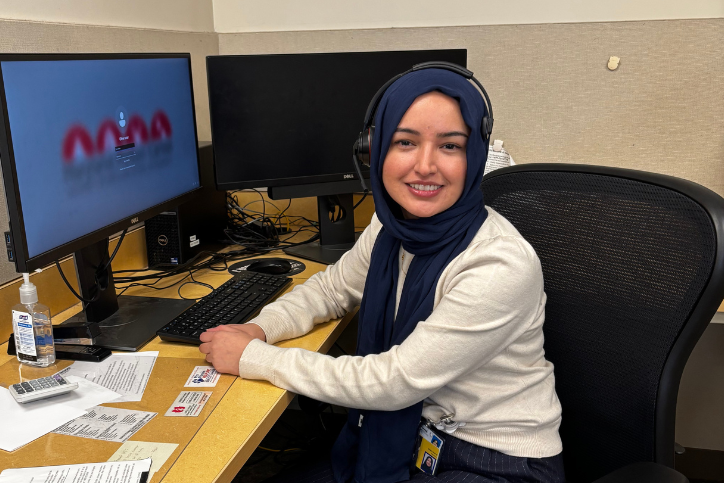
One of the goals of our eAntidote blog is to introduce you to the real poison experts who answer the phones at the Maryland Poison Center (MPC), as well as our staff members. In addition to being nurses and pharmacists, they are parents, grandparents, artists, athletes, sports fans, and more! Read the Q&A below to get to know our toxicology fellow: Misbah Khatib.
Why did you go into the field of pharmacy?
I studied microbiology in undergrad and after graduation I started working at an independent community pharmacy. At this job, I learned how to problem-solve, how different medicines work, and how to provide effective patient care. This led me to pursue a degree in pharmacy to continue learning about medicines and how to improve patient care on a broader level.
How did you end up working at the Poison Center?
While in pharmacy school, I got a position at an after-hours public health answering service between the Washington Health Department and Washington Poison Center (WAPC). This opened the door for me to become involved in a Poison Center research project, specifically on high-dose acetaminophen. I became more interested in toxicology, patient care, and the mechanism of toxicology for medicines. I spent time at the WAPC learning from their SPIs and how they treated poisoned patients. Closer to graduation from pharmacy school, I wanted to get a deeper understanding of Poison Centers. This led me to do a rotation at the WAPC where I enjoyed communicating with the interdisciplinary team (multiple types of healthcare professionals working together), caring for poisoned patients, and understanding Poison Center systems. The public health side of the work was also interesting; we get to prevent harm and have a larger role in public health. After my rotation at WAPC and graduating pharmacy school, I pursued the 2-year Clinical Toxicology Fellowship here at the MPC.
What do you enjoy most about your work?
I enjoy problem-solving because every call is different. Sometimes calls result in quick answers, relieving worried callers and preventing emergency room visits. Other calls have a more in-depth research process and conversations with the team.
I enjoy being involved in discussions with our interdisciplinary team, especially during morning rounds. I have the opportunity to continuously learn about a wide variety of topics. What I learned in pharmacy school is now playing out as I practice pharmacy and toxicology.
Why are Poison Centers and poison specialists like you important?
Poison Centers provide free, immediate guidance on poisonings and overdoses for both the public and healthcare professionals. We can guide callers on how to safely manage situations and direct them to other resources such as a healthcare facility when necessary. Through our expertise and follow ups, we’re able to reduce unnecessary visits to emergency departments and guide health care teams when they are in situations that are less common for them.
Our free and confidential services are vital, especially during times when patients don’t have insurance. We are a free source with expert information so there’s no financial burden on the patient.
What’s an important message you want to share about poison safety?
Store medicines and household cleaning products in their original labeled containers. Then store them up, away, and out of sight. Even if they are in child-resistant packaging, children can still open and access those products. By doing these two things, you can help prevent poisonings from happening.
Also, avoid purchasing the large bottles of medicines. Only keep minimal amounts on hand, as needed. This helps prevent overdoses when people do not have access to that large volume of pills.
What do you enjoy doing when you’re not working?
When I’m not working, I enjoy spending time with family and friends. I love to try different foods and restaurants. Most of all, I enjoy traveling, and my goal in life is to travel more internationally. I have been to a few European countries, so I want to finish traveling to all of the European countries then move to Asian countries.

Leave a Reply