
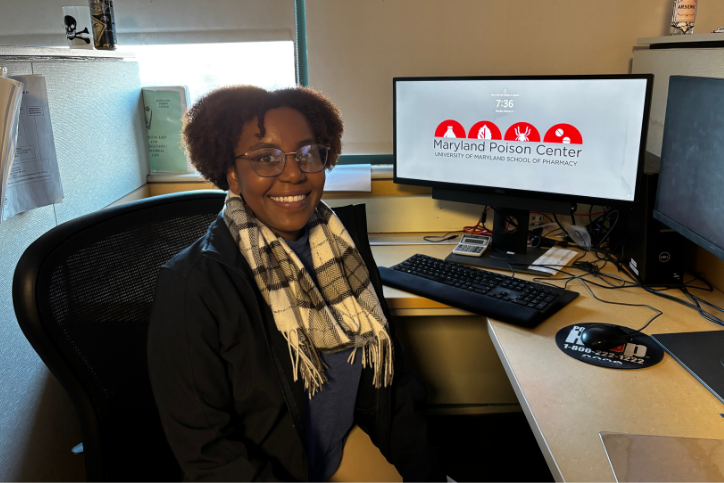
One of the goals of our eAntidote blog is to introduce you to the real poison experts who answer the phones at the Maryland Poison Center (MPC), as well as our staff members. In addition to being nurses and pharmacists, they are parents, grandparents, artists, athletes, sports fans, and more! Read the Q&A below to get to know our Clinical Toxicologist, Dr. Kayla Bourgeois.
Why did you go into the field of pharmacy?
How did you end up working at the poison center?
I loved organic chemistry while in pharmacy school and wanted to use it in a more exciting way. It didn’t click for me until I was doing a rotation at the Mississippi Poison Center where I was able to really apply all that I was learning in school to real-life situations. I enjoyed working in the emergency department, which led me to pursue residencies that had affiliations with Poison Centers or emergency departments. I then did a clinical toxicology fellowship at Upstate New York Poison Center. Now as a clinical toxicologist and clinical toxicology fellowship director, I enjoy teaching and giving back to the fellows since I was once in their position.
What do you enjoy most about your work?
The thing I enjoy most about my work is the impact I can make. It’s a unique population of people who are trained in clinical toxicology- I am actually the first Black female board certified clinical toxicologist. I enjoy being someone that people can come to for help and information. Since it is a small field, it is our responsibility to educate people and spread this information accurately and I enjoy being someone people can turn to.
Why are Poison Centers and toxicologists like you important?
resource for our communities for a few reasons. First, there is lots of money, questions, time, and effort that can be saved by calling the Maryland Poison Center. Secondly, Poison Centers are important for public health by knowing what is going on in our communities and globally that is affecting people’s health. Lastly, Poison Centers are able to help the emergency departments of hospitals which can help the entire hospital function better.
Poison specialists are important because it’s their responsibility to be knowledgeable and bring ease to people and healthcare systems. They can quickly explain to people that they are going to be okay or next steps they should take for their health. It’s necessary for people to know about toxicity because anything can be a poison, and we are able to help with that.
What’s an important message you want to share about poison safety?
Keeping an up-to-date medicine list with you is very beneficial for healthcare providers to help you get the care you need. Also, don’t be afraid to ask questions you may have about your medicines to your pharmacist or health care provider. They are happy to answer!
What do you enjoy doing when you’re not working?
When I’m not working, I enjoy spending time with my small group at church and doing home improvement projects. I also enjoy reading on my Kindle, trying new coffee shops, and playing soccer when it’s warm outside.


Leave a Reply